NOVEMBER 23, 2026 · UNOFFICIAL OR WHIMSICAL
Fibonacci Day
International mathematics enthusiasts; date uses US month/day notation

When it is observed
Every November 23; 11/23 begins 1, 1, 2, 3
The story behind the date.
The date echoes the opening digits of the Fibonacci sequence. The informal observance has no confidently established founder.
November 23 hides a small mathematical joke in plain sight. Written in month/day notation, 11/23 gives us 1, 1, 2, 3, the opening of the familiar Fibonacci sequence. Each later number is the sum of the two before it: 5, 8, 13, and onward. Fibonacci Day is an informal celebration of that pattern, not an official holiday with a securely documented founder. It is a welcome excuse to remember that mathematics can be playful. A string of numbers can become a question about growth, arrangement, repetition, or the way a simple rule produces surprising results.
Try writing the sequence together and seeing how far you can go without a calculator. Then look at a sunflower, a pine cone, or a carefully made spiral, keeping observation separate from exaggeration. Fibonacci-related patterns occur in some natural structures, but not every flower or attractive proportion is a perfect example. The world becomes more interesting when we check a beautiful claim rather than repeating it automatically. Today can be a gentle exercise in noticing and testing: count, compare, wonder, and revise. Whether you loved mathematics at school or quietly avoided it, there is room here for curiosity without an examination, and delight without needing to know every answer.
“The Analytical Engine weaves algebraical patterns just as the Jacquard-loom weaves flowers and leaves.”
— Ada Lovelace
YOUR OWN REASON TO CELEBRATE
Does this day mean something to you?
A birthday, an anniversary, a person you hold dear. Tell us what makes November 23 special.
ALSO ON THIS DAY · 1889
A coin-operated phonograph invites public listening
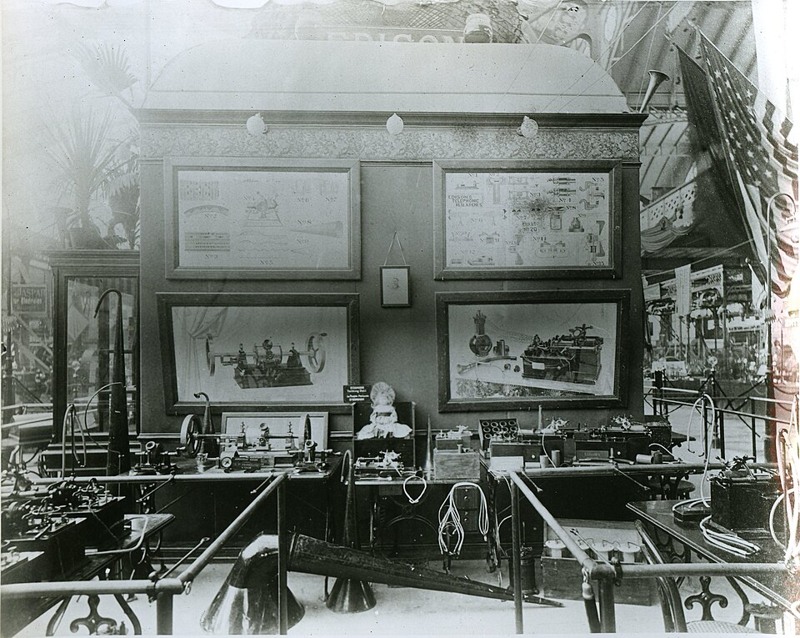
On November 23, 1889, Louis Glass installed a coin-operated phonograph at the Palais Royal Saloon in San Francisco. Often described as a predecessor of the jukebox, the machine let a paying listener hear recorded sound through listening tubes. It was very different from the brightly lit record-selecting cabinets that later became familiar in cafés and diners. The important change was the transaction: recorded music could become a public, repeatable experience purchased a little at a time. The story connects technology with social habit. Before the endless playlists in our pockets, someone had to build a machine, choose a location, and discover whether people would pay to listen. A small act of curiosity helped reshape how music entered everyday places.