NOVEMBER 9, 2026 · OFFICIAL OBSERVANCE
World Freedom Day
United States; commemorates events in Germany and Central and Eastern Europe
When it is observed
November 9; U.S. presidential commemorations have marked this date
The story behind the date.
President George W. Bush proclaimed November 9, 2001 as World Freedom Day, recalling the opening of the Berlin Wall in 1989.
World Freedom Day is a United States commemorative observance associated with November 9 and the opening of the Berlin Wall in 1989. A 2001 presidential proclamation established the name for that year's remembrance, connecting it to the end of Cold War divisions. It is not a United Nations international day, and its title should not obscure the local experiences behind that history. For Berliners, barriers had divided neighborhoods and families. Remembering the wall's opening offers a concrete way to think about freedom through movement, connection, public expression, and the ability to shape an ordinary life.
Read a personal account or look closely at a historical photograph from that evening. Behind a familiar headline are people deciding where to go, whom to call, and what a newly opened crossing might mean. Let those individual experiences complicate easy slogans. At home, the date can prompt a conversation about a freedom you value and the responsibilities that help protect it for others. Listening across disagreement is one place to begin. History becomes more useful when it encourages attention to real people, including those whose hopes and fears do not resemble our own, rather than serving only as a story about a finished past.
“Power concedes nothing without a demand.”
— Frederick Douglass
YOUR OWN REASON TO CELEBRATE
Does this day mean something to you?
A birthday, an anniversary, a person you hold dear. Tell us what makes November 9 special.
ALSO ON THIS DAY · 1989
The Berlin Wall’s crossings open
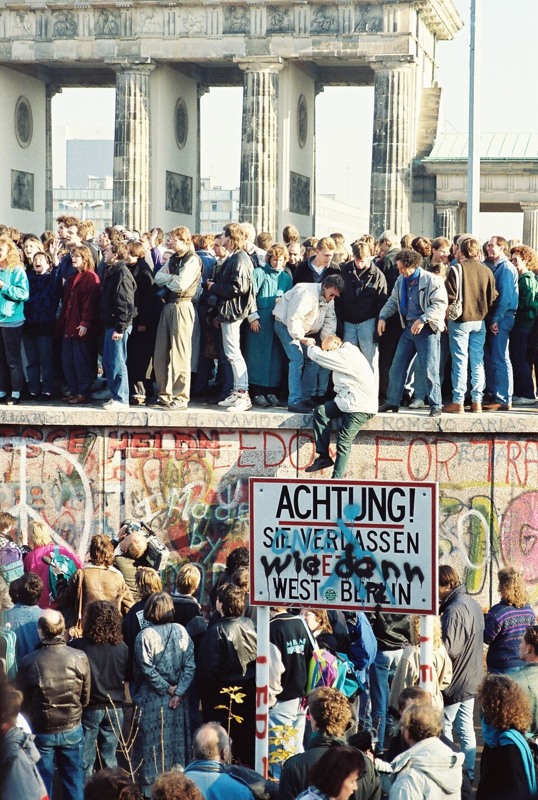
On the evening of November 9, 1989, border crossings in Berlin opened after a confused announcement about new travel rules and growing public pressure. People gathered at checkpoints, and the division that had shaped the city since 1961 began to break apart. The wall was not physically removed in one night, and German reunification followed in 1990. Those distinctions help preserve the extraordinary evening without compressing a complex transition into a single image. The opening became a powerful symbol because it changed ordinary possibilities: visiting family, crossing a street, making plans. Large historical shifts are felt through such intimate freedoms, and the photographs remain moving because they show people encountering a future that had suddenly become possible.