NOVEMBER 8, 2026 · UNOFFICIAL OR WHIMSICAL
National STEM/STEAM Day
United States; educational participation worldwide

When it is observed
November 8 each year
The story behind the date.
MGA Entertainment established the educational promotional day in 2015.
National STEM/STEAM Day is observed on November 8 to encourage interest in science, technology, engineering, mathematics, and the arts. Toy company MGA Entertainment established the occasion in 2015, making this a privately initiated educational celebration rather than a federal holiday. The arts in STEAM acknowledge the value of imagination and design alongside technical thinking. At its best, the day makes exploration approachable. A question about a shadow, a bridge, a melody, or a kitchen timer can become a beginning. Curiosity does not need to look impressive before it deserves to be taken seriously.
Try a small project with someone whose questions surprise you. Build a paper bridge, sketch a device that would make an everyday task easier, or compare how different materials absorb water. Keep the emphasis on observing and revising rather than producing a perfect result. Ask what happened, what you expected, and what you would change next time. Adults can model the pleasure of not knowing an answer yet. A notebook filled with imperfect attempts may teach more than a polished display. The most generous thing we can offer a young learner is sometimes the time and encouragement to follow a question farther than the first obvious explanation.
“Imagination is more important than knowledge.”
— Albert Einstein
YOUR OWN REASON TO CELEBRATE
Does this day mean something to you?
A birthday, an anniversary, a person you hold dear. Tell us what makes November 8 special.
ALSO ON THIS DAY · 1895
Röntgen notices a new kind of ray
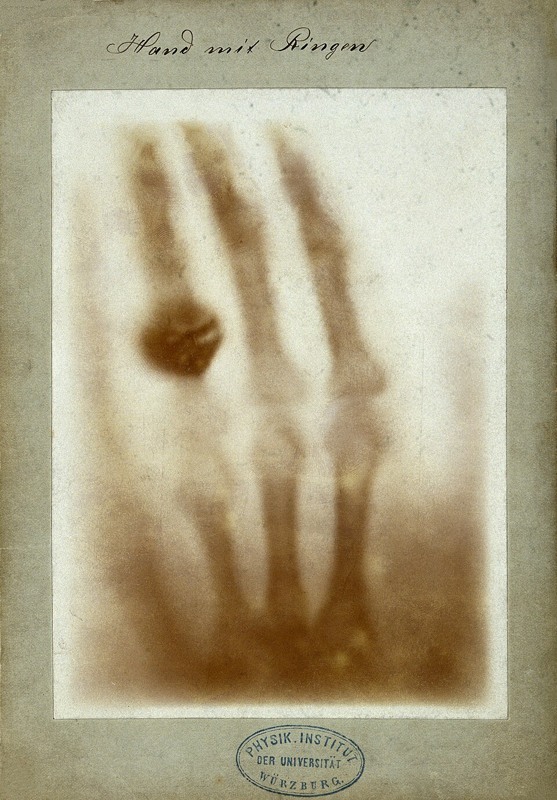
On November 8, 1895, Wilhelm Conrad Röntgen observed a previously unknown form of radiation while experimenting with a discharge tube in Würzburg, Germany. He called the rays X-rays, using a letter associated with an unknown quantity. The discovery opened an extraordinary way to examine structures inside the body and other objects without opening them. Medical uses developed rapidly, while understanding of radiation risks required further learning. The milestone is a lesson in attentive observation: an unexpected effect can be the beginning of a question worth pursuing. It also reminds us that useful discoveries carry responsibilities. The ability to see more must be accompanied by care in how that ability is used.