NOVEMBER 18, 2026 · INTERNATIONAL OBSERVANCE
GIS Day
Worldwide; geographic-information community

When it is observed
Third Wednesday of November; November 18 in 2026
The story behind the date.
The first GIS Day was held in 1999; Esri supports the annual geographic-information celebration.
A map can tell us where to go, but it can also help us understand why a place matters. GIS Day celebrates geographic information systems: tools that connect information with location so that patterns become easier to see. In 2026 the observance falls on Wednesday, November 18, the third Wednesday of November. The first GIS Day took place in 1999. Behind the technical name is a very human activity: asking better questions about the spaces we share. Where are services hardest to reach? Which routes feel safer? How does a neighborhood change over time?
You do not need specialist software to begin thinking geographically. Look at your usual journey and notice the trees, crossings, bus stops, and public places along it. Compare the route that is shortest with the route that is most comfortable for someone walking, cycling, or using a wheelchair. A beautiful map is useful, but responsible interpretation matters too: missing information can hide people, and a neat boundary can oversimplify a lived experience. Today is a good opportunity to appreciate the planners, researchers, emergency workers, and community members who use location thoughtfully. The next time a map helps you make a decision, consider the careful work behind that apparently simple picture.
“Everything is related to everything else, but near things are more related than distant things.”
— Waldo Tobler
YOUR OWN REASON TO CELEBRATE
Does this day mean something to you?
A birthday, an anniversary, a person you hold dear. Tell us what makes November 18 special.
ALSO ON THIS DAY · 1883
Railroads agree on standard time
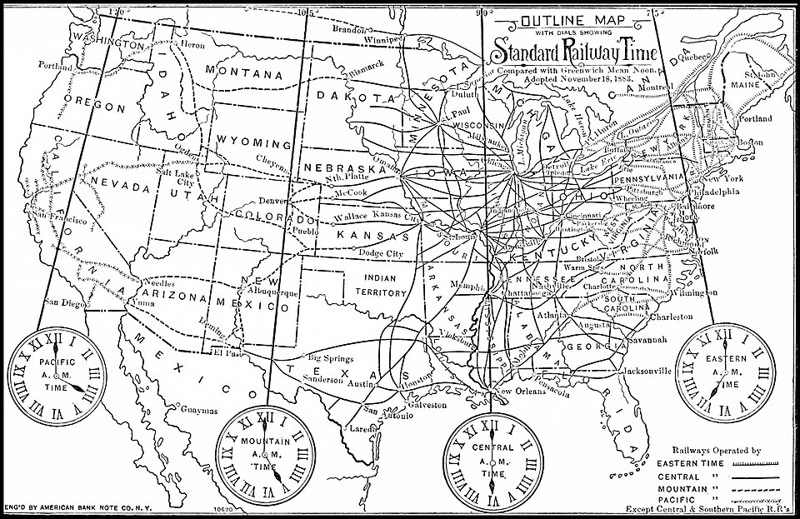
At noon on November 18, 1883, North American railroads adopted Standard Railway Time. Before standardized zones, many communities kept local solar time, making railway schedules increasingly difficult to coordinate. A traveler could encounter several different clocks on one journey. The change organized railway operations around shared regional times, helping people and trains agree on when an event was supposed to happen. It did not instantly settle every legal or local question about timekeeping, but it was a decisive practical step. The story makes an everyday clock look less inevitable. What seems natural on a timetable is also an agreement: a social and technical system designed so that strangers can arrive, depart, and work together with fewer misunderstandings.