NOVEMBER 16, 2026 · INTERNATIONAL OBSERVANCE
International Day for Tolerance
Worldwide; United Nations and UNESCO

When it is observed
Every November 16
The story behind the date.
UNESCO adopted its Declaration of Principles on Tolerance on November 16, 1995. The UN General Assembly called for annual observance in 1996.
Tolerance begins in an ordinary place: a conversation with someone whose experience is different from our own. Observed every November 16, this international day asks us to make room for those differences without surrendering anyone's dignity. UNESCO's Member States adopted the Declaration of Principles on Tolerance on this date in 1995; a United Nations General Assembly resolution followed in 1996. The occasion is rooted in education, human rights, and the practical work of living together. It is more demanding than simply being polite, because it asks us to notice assumptions before they harden into unfair treatment.
There is a gentle way to bring that idea into today. Ask a question without preparing a rebuttal. Learn how a neighbor prefers their name to be pronounced. Read an account of a community whose history you barely know. Respect does not require agreement with every opinion, and tolerance does not mean accepting abuse or discrimination. It means defending the space in which people can belong without being reduced to a stereotype. In families, on a badminton court, or around a crowded dinner table, a little curiosity can change the quality of an encounter. Let understanding have the first word.
“Tolerance does not mean indifference or a grudging acceptance of others.”
— Ban Ki-moon
YOUR OWN REASON TO CELEBRATE
Does this day mean something to you?
A birthday, an anniversary, a person you hold dear. Tell us what makes November 16 special.
ALSO ON THIS DAY · 1974
A message leaves Earth from Arecibo
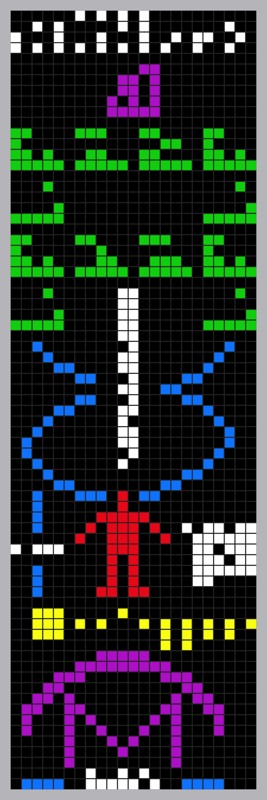
On November 16, 1974, the Arecibo Observatory in Puerto Rico transmitted a brief binary message toward the globular star cluster M13. The broadcast demonstrated what the newly upgraded radio telescope could do. Its carefully arranged information represented basic aspects of humanity and the world we inhabit. It was not a conversation with an identified civilization, and a response was never something to expect on an ordinary human timetable. What makes the episode moving is the choice to introduce ourselves at all: to turn scientific capability into a question addressed beyond Earth. A short signal became an enduring example of the meeting between engineering, imagination, and the desire to know whether anyone else is listening.