NOVEMBER 19, 2026 · INTERNATIONAL OBSERVANCE
International Men's Day
Originating in Trinidad and Tobago; observed internationally

When it is observed
Every November 19
The story behind the date.
The current November observance was inaugurated in Trinidad and Tobago by Jerome Teelucksingh in 1999; it is not a UN-designated international day.
The men who make a difference in our lives are not always the loudest people in the room. They may be the friend who checks in, the father learning to listen, or the teammate who makes a newcomer feel welcome. International Men's Day, observed on November 19, offers room to recognize those contributions while discussing men's wellbeing. The current November observance was inaugurated by historian Jerome Teelucksingh in Trinidad and Tobago in 1999. It is an international civil-society observance, rather than a United Nations designated day, and its conversations include positive role models, health, and stronger relationships.
A meaningful celebration can be reassuringly ordinary. Thank someone for a specific act of care. Invite a friend for a walk and leave enough silence for an honest answer to how he is doing. Encourage routine healthcare without turning it into a test of toughness. Make room for the many ways men can build a good life, including asking for help, sharing family responsibilities, and showing affection. Support for men works best alongside respect and opportunity for everyone. Today does not require perfect heroes. It asks us to notice steady kindness and to create relationships in which people do not have to hide their worries in order to feel valued.
“No longer talk at all about the kind of man that a good man ought to be, but be such.”
— Marcus Aurelius
YOUR OWN REASON TO CELEBRATE
Does this day mean something to you?
A birthday, an anniversary, a person you hold dear. Tell us what makes November 19 special.
ALSO ON THIS DAY · 1969
Apollo 12 turns a Moon landing into a precision task
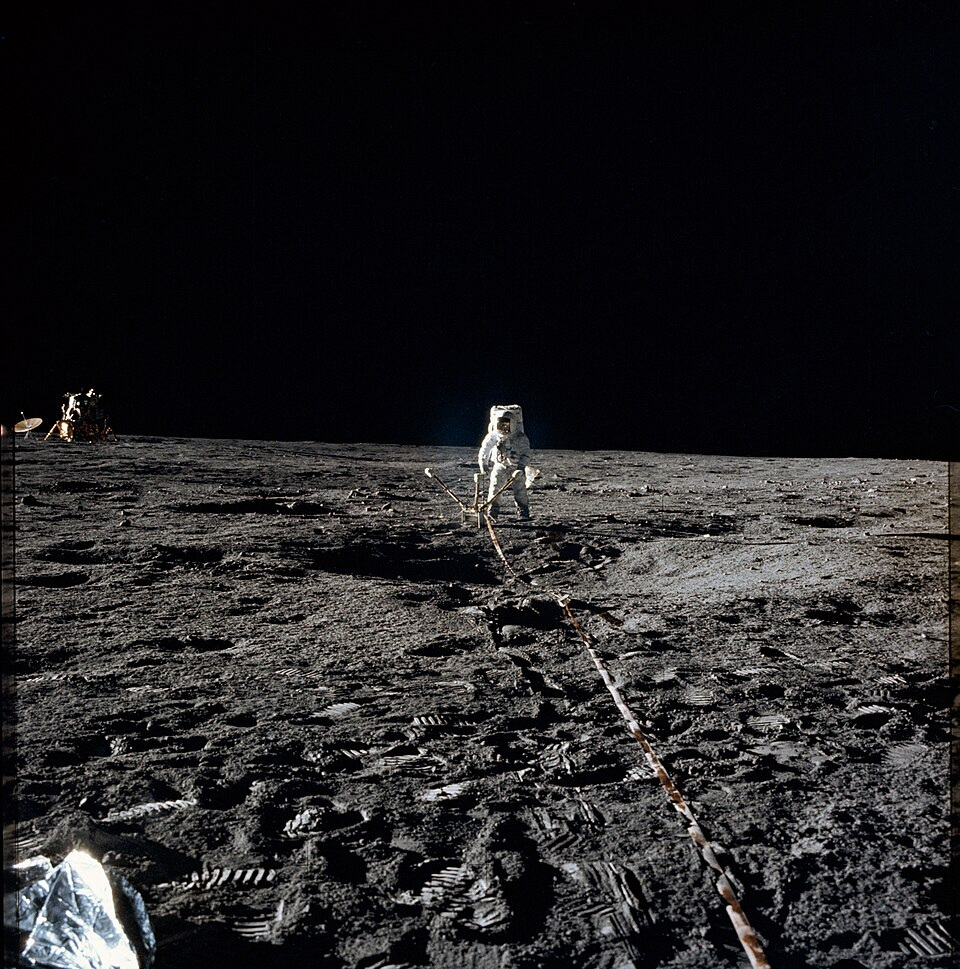
On November 19, 1969, Apollo 12’s lunar module landed in the Ocean of Storms on the Moon. Charles “Pete” Conrad and Alan Bean reached a site close enough to the earlier Surveyor 3 spacecraft for them to visit it on foot. Richard Gordon remained in lunar orbit. After Apollo 11 had demonstrated that people could land and return, this mission showed that choosing a landing location with greater accuracy could expand the scientific work that astronauts were able to do.
Conrad and Bean collected samples, deployed experiments, and retrieved selected parts from Surveyor 3 for study on Earth. The landing was therefore a step toward treating a lunar visit as a planned field expedition, with particular places and questions in mind. Its lesson reaches beyond spaceflight: the second achievement is not merely a repetition of the first. Better control, clearer objectives, and careful observation can turn a successful arrival into a deeper investigation.